
Colonoscopy Infection Lawsuit Overview
Lawsuits are being investigated on behalf of patients who underwent a colonoscopy procedure and later developed serious infections or complications that may be linked to contaminated medical scopes.
Colonoscopy procedures rely on reusable devices known as colonoscopes, which are inserted into the body to examine the colon. These instruments contain complex internal channels and components that must be thoroughly cleaned and disinfected between each use.
However, growing evidence suggests that some colonoscope designs may make it difficult to completely remove bacteria and biological material, even when proper sterilization procedures are followed. As a result, contamination may remain inside the device and be transmitted from one patient to another.
Similar concerns have also led to litigation over other types of reusable medical scopes, including devices used in ERCP procedures and broader endoscope-related infections. For more information, see our ERCP Infection Lawsuit and Endoscope Infection Lawsuit pages, which detail similar claims involving contamination risks and device design issues.
With an increasing number of individuals reporting infections after colonoscopy procedures, medical scope infection lawsuits are now being pursued against certain manufacturers, who failed to design safer devices or adequately warn healthcare providers about the risk of contamination.
Who Can File a Colonoscopy Infection Lawsuit?
Financial compensation through a colonoscopy infection lawsuit settlement may be available for individuals who developed any of the following complications after a procedure:
- E. coli or other bacterial infections
- Sepsis or bloodstream infections
- CRE or other antibiotic-resistant infections
- Severe gastrointestinal infections
- Hospitalization following a colonoscopy
- Long-term health complications linked to infection
There are no fees or expenses unless a settlement or recovery is obtained.
Find out if you qualify for a
SCOPE INFECTION LAWSUIT

Index of Colonoscopy Infection Lawsuits On This Page
How Colonoscopy Scopes Are Used During Procedures
Colonoscopy Scopes Linked to Increased Infection Risk
How Colonoscopy Scope Contamination May Occur
Infections Linked to Colonoscopy Procedures
Symptoms of a Colonoscopy-Related Infection
Reports of Colonoscopy Infection Clusters and Hospital Warnings
What To Do If You Develop an Infection After a Colonoscopy
Are there any costs to hire a Scope Infection Lawyer?
How Colonoscopy Scopes Are Used During Procedures
A colonoscopy scope is a flexible medical device used during medical procedures that examine the inside of the colon and rectum. It is a long, thin tube equipped with a camera, light, and small internal channels that allow doctors to perform procedures such as removing polyps or taking tissue samples.
During a colonoscopy, the scope is inserted into the body and guided through the digestive tract, providing real-time images that help physicians identify signs of disease or abnormalities. Because the device comes into direct contact with internal tissue and bodily fluids, it must be carefully cleaned and disinfected before it can be used on another patient.

Unlike single-use medical tools, many colonoscopy scopes are reused multiple times. A single device may be used on many patients over time, which makes proper sterilization critical to prevent the spread of infection.
Colonoscopy infection lawsuits have raised concerns that the complex design of these reusable scopes may allow bacteria and biological material to remain trapped inside the device, even after standard cleaning procedures are followed. This can increase the risk that contamination may be passed from one patient to another during routine procedures.
Colonoscopy Scopes Linked to Increased Infection Risk
Growing evidence suggests that reusable colonoscopy scopes may carry a higher risk of bacterial contamination than many patients realize, even when they are cleaned according to manufacturer guidelines.
In a review published in the medical journal Endoscopy International Open, researchers analyzed contamination rates in scopes that had already undergone standard disinfection procedures and were considered ready for use.
The findings showed that:
- Nearly 1 out of every 3 colonoscopy scopes tested still had detectable bacteria after cleaning
- Contamination was found on scopes cleared for patient use, raising concerns about the effectiveness of current sterilization methods
- Higher testing standards revealed even greater contamination rates, approaching 30% in some cases
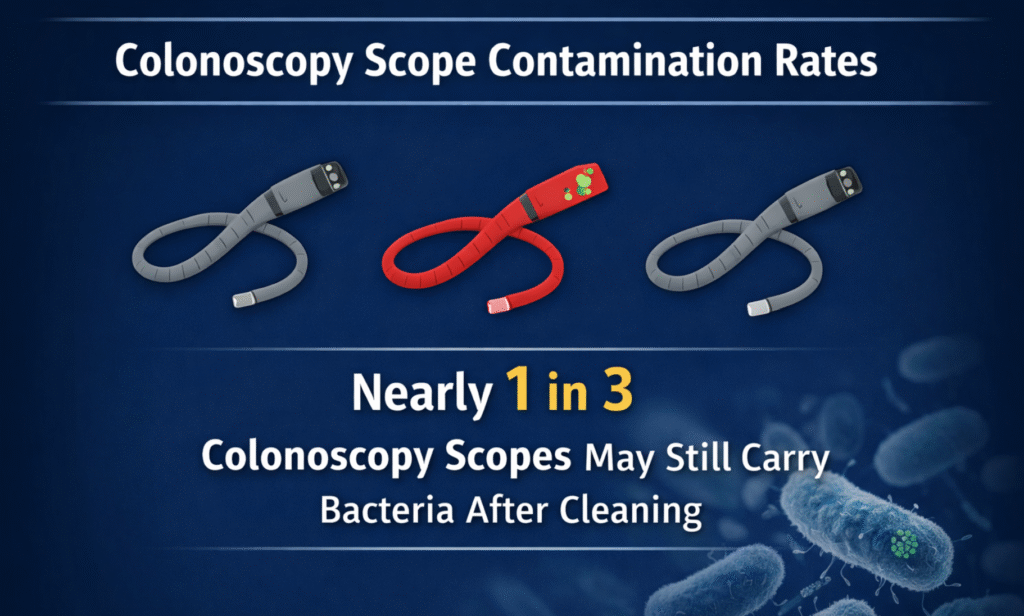
These findings are important because they suggest that infections following a colonoscopy may not be isolated events. Instead, they may be linked to broader issues involving how reusable scopes are cleaned, maintained, and designed.
How Colonoscopy Scope Contamination May Occur
Colonoscopy scopes are designed to be reused on multiple patients, which means they must go through a multi-step cleaning process known as “reprocessing” after each use.
Colonoscopy Scope Reprocessing
The reprocessing procedure involves multiple steps intended to remove debris and eliminate harmful microorganisms, including:
- Manual pre-cleaning to remove visible debris
- Flushing internal channels with cleaning solutions
- High-level disinfection using chemical agents designed to kill bacteria and viruses
- Rinsing and drying before storage
These methods are widely used in hospitals and are intended to eliminate harmful microorganisms. However, lawsuits and safety investigations have raised concerns that these procedures may not always be effective for complex, reusable scopes.
Colonoscopy Scope Designs May Prevent Proper Sterilization
Colonoscopy infection product liability lawsuits claim that certain scope designs may make it difficult, or in some cases impossible, to fully clean and disinfect the device between uses.
According to these claims and previous FDA warnings, the structure of the scope itself may allow bacteria and biological material to become trapped in areas that are not easily reached during standard reprocessing. Key design features that may contribute to contamination include:
- Long, narrow internal channels that are difficult to fully access
- Sealed or partially enclosed components that cannot be directly scrubbed
- Moving parts that may trap biological material
- Microscopic surfaces where bacteria can adhere and grow
These design limitations may prevent cleaning solutions from reaching all internal surfaces, allowing contamination to remain inside the device even after sterilization procedures are completed.
Types of Infections Linked to Colonoscopy Procedures
Those who are exposed to contaminated colonoscopy scopes may develop a range of bacterial infections, some of which can become serious very quickly. Common infections reported after colonoscopy procedures include:
- E. coli infections: Can cause severe stomach cramps, diarrhea, and dehydration. In some cases, symptoms become intense within a short period of time and require medical treatment.
- Salmonella infections: Often lead to fever, diarrhea, and abdominal pain, sometimes lasting several days and requiring antibiotics or hospitalization in more severe cases.
- Pseudomonas infections: A bacteria commonly linked to contaminated medical equipment, which can cause infections in the bloodstream, lungs, or other parts of the body, especially in vulnerable patients.
- CRE (carbapenem-resistant Enterobacteriaceae): A highly drug-resistant bacteria that is difficult to treat and has been associated with outbreaks involving reusable scopes. These infections can be life-threatening.
- Bloodstream infections: Occur when bacteria enter the bloodstream, potentially spreading infection throughout the body and leading to serious complications.
- Sepsis: A life-threatening condition where the body has an extreme response to infection, which can lead to organ failure or death if not treated immediately.
In many cases, these infections may require:
- Emergency room visits shortly after the procedure
- Hospitalization for monitoring and treatment
- IV antibiotics administered over several days
- Follow-up care or additional procedures
Symptoms of a Colonoscopy-Related Infection
Symptoms of an infection may not appear immediately and can develop within a few days or even weeks after a colonoscopy. Many patients initially believe they are experiencing normal post-procedure discomfort, but symptoms may worsen instead of improving. Common warning signs include
- Persistent or worsening abdominal pain
- Fever or chills that develop after returning home
- Nausea or vomiting that does not resolve
- Diarrhea, sometimes severe or prolonged
- Blood in the stool or unusual bowel changes
- Unexplained fatigue or weakness
More serious symptoms may indicate that the infection is spreading:
- Rapid heart rate or feeling faint
- Confusion or difficulty concentrating
- Shortness of breath or difficulty breathing
- Low blood pressure or dizziness
These symptoms may be signs of sepsis and require immediate medical attention. Delayed treatment can significantly increase the risk of complications.
Reports of Colonoscopy Infection Clusters and Hospital Warnings
In some cases, hospitals have issued notification letters to patients after identifying potential infection risks linked to colonoscopy procedures performed over a specific period of time.
For example, one colonoscopy infection outbreak in Massachusetts prompted notification to nearly 300 patients who underwent colonoscopies over several months after determining that a colonoscopy scope used during those procedures may not have been properly disinfected, or unable to be fully sterilized. Patients were warned of a possible risk of exposure to infections such as hepatitis B, hepatitis C, and HIV, and were offered medical testing as a precaution.
Situations like this may raise concerns when:
- Multiple patients are treated using the same scope over a period of time
- A breakdown in the cleaning or disinfection process is later identified
- Patients are notified of potential exposure to infections after their procedure
- Hospitals recommend follow-up testing for bloodborne pathogens or bacterial infections
What Should You Do If You Develop an Infection After a Colonoscopy?
If you begin experiencing symptoms of an infection after a colonoscopy, it is important to take them seriously and act quickly. What may seem like normal post-procedure discomfort can sometimes be a sign of a more serious complication.
Steps you should consider include:
- Seek medical attention right away: If you develop fever, severe abdominal pain, or worsening symptoms, contact a doctor or go to the emergency room. Early treatment can prevent complications.
- Follow up with your healthcare provider: Let your doctor know when your symptoms started and that they occurred after a colonoscopy. This timing can be important in identifying the cause.
- Request copies of your medical records: This may include procedure reports, discharge instructions, and any test results related to your infection.
- Ask about the type of infection diagnosed: Understanding whether the infection involves bacteria like E. coli, pseudomonas, or a resistant organism like CRE can help determine if contaminated equipment may be involved.
- Document your symptoms and timeline: Keep a record of when symptoms began, how they progressed, and any treatment you received.
- Do not assume it was a normal side effect: While mild discomfort can be expected after a colonoscopy, infections are not considered a normal outcome and may indicate a larger issue.
- Consider speaking with a lawyer about your legal options: If your infection resulted in hospitalization or serious complications, a legal review may help determine whether it could be linked to a contaminated colonoscopy scope.
Are there any costs to hire a Scope Infection Lawyer?
There are absolutely no out-of-pocket costs to review your case or hire our attorneys. Colonoscopy infection claims are evaluated for individuals throughout the United States, and all cases are handled on a contingency fee basis.
Through contingency fee representation, individuals have access to the experience and resources of our national law firm to pursue compensation, regardless of their financial situation.
You pay nothing upfront to hire our Colonoscopy Infection Lawyers, and we only receive attorney fees and expenses if compensation is recovered.
Our law firm receives nothing unless we win your case!
What Are the Steps in a Colonoscopy Infection Case Evaluation?
Complete Our Case Evaluation Request Form. Providing contact information and some information about your colonoscopy infection case.
Get Contacted by Saiontz & Kirk You will be contacted by our law firm to help determine if financial compensation may be available for you and your family.
You Decide If You Want to Move Forward. If our lawyers determine that we can help with your case then you decide whether to move forward and hire us to pursue compensation.