

Heated Insole Burn Injury Lawsuits
Heated insole burn injury lawsuits are being pursued against manufacturers, distributors, and retailers of battery-powered foot warmers, heated socks or electric insoles, which have caused serious foot burns and related injuries to consumers throughout the U.S.
The inserts rely on lithium-ion batteries and internal heating elements that are worn in direct contact with the foot for extended periods of time. When heated insoles malfunction or lack proper temperature regulation, they can continue producing heat even after reaching unsafe levels.
Many products sold in recent years lacked critical safety protections, such as automatic shutoff features, reliable temperature controls, safe or properly tested batteries, or clear instructions warning users about burn risks.
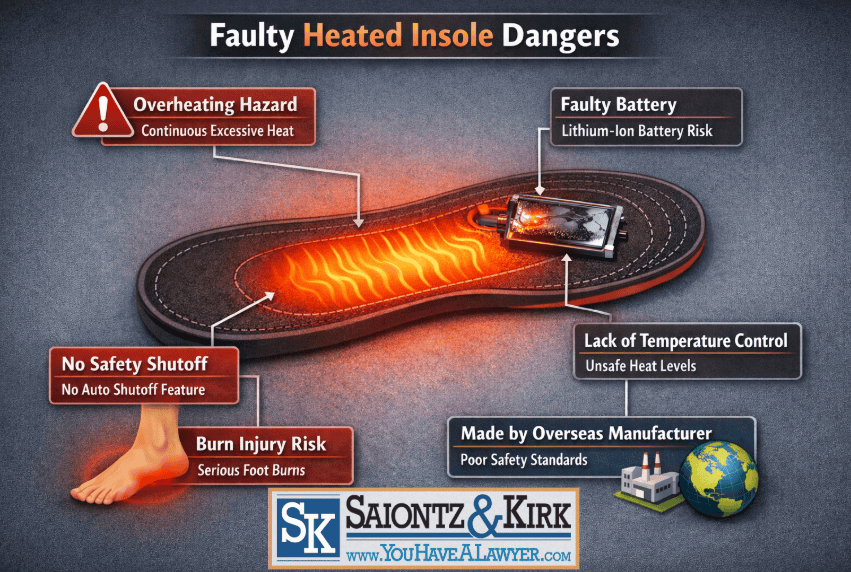
Often the heated insoles linked to burn injuries were manufactured by overseas companies that sell products through online marketplaces, like Amazon. However, lawsuits allege that these retailers often fail to ensure that adequate safety testing was conducted, or that reliable warnings and instructions are provided.
As a result, attorneys are pursuing heated insole lawsuits against both the manufacturers and online marketplaces such as Amazon, alleging they played a role in distributing and profiting from dangerously defective heated insoles. The lawsuits contend that these products continued to be sold to U.S. consumers despite reports of serious burn injuries and growing public safety concerns, raising questions about whether retailers failed to take reasonable steps to protect consumers.

Who Can File a Heated Insole Burn Injury Lawsuit?
You may qualify for a heated insole burn injury lawsuit if you suffered serious injuries after using battery-powered foot warmers, heated socks or electric insoles. Our heated insole burn injury lawyers are reviewing claims for individuals who:
- Suffered second- or third-degree burns requiring medical treatment or hospitalization
- Experienced permanent scarring, nerve damage, or loss of sensation in the feet
- Were injured after heated insoles overheated during normal use
For a free, confidential consultation, contact our burn injury lawyers at 1-800-522-0102 or by filling out the form by clicking here.
Heated Insole Lawsuit Info On This Page:
Defective Heated Insole and Foot Warmer Designs
Burn Injuries From Defective Heated Insoles and Foot Warmers
CPSC Warnings Over Heated Insoles Sold on Amazon
Allegations Raised in Foot Warmer Burn Injury Lawsuits
Why Lawsuits Are Being Filed Against Amazon
Compensation From a Heated Insole Burn Injury Lawsuit
Timeframe to File a Heated Insole Burn Injury Lawsuit
Are There Any Costs to Hire a Heated Insole Lawyer?
Start a Heated Insole Burn Injury Lawsuit Consultation
Defective Heated Insole and Foot Warmer Designs
Battery-powered heated insoles and electric foot warmers are marketed as safe cold-weather products designed to be worn inside shoes or boots. Many models sold through online marketplaces rely on lithium-ion batteries and internal heating elements that sit in direct contact with the foot for extended periods of time.
Lawsuits allege that certain heated insoles were defectively designed in a manner that allowed the battery or heating components to overheat, ignite, or explode during normal and intended use. According to the complaints, some products lacked essential safety features such as adequate thermal regulation, insulation between the heating element and the foot, or fail-safe mechanisms to prevent dangerous heat buildup inside enclosed footwear.
As a result, users have reported sudden ignition events inside their shoes or boots, causing severe burns before they had an opportunity to react or remove the product.
How Heated Insoles Can Overheat or Catch Fire
Unlike external warming devices, heated insoles are enclosed inside footwear, limiting airflow and trapping heat around the battery and heating elements. Lawsuits allege that defects in these products can lead to:
- Battery overheating while worn inside shoes or boots
- Thermal runaway events involving lithium-ion batteries
- Ignition or explosion of the insole during normal use
- Rapid onset of severe burns to the feet and toes
Lack of Safety Features and Warnings
The lawsuits further allege that safer alternative designs were available but not implemented. These include improved battery protection, reliable automatic shutoff mechanisms, thermal barriers to protect the foot, and clear warnings alerting consumers to the risk of overheating, fire, or explosion.
According to the complaints, consumers were not warned that heated insoles could ignite or catch fire during normal use, leaving users unaware of the risk until after serious injuries occurred. Plaintiffs allege that these design and warning failures rendered the products unreasonably dangerous when sold to consumers through Amazon and other retailers
Burn Injuries From Defective Heated Insoles and Foot Warmers
According to lawsuits and consumer safety reports, battery-powered insoles have overheated, ignited, or caught fire during normal use inside shoes or boots resulting in serious injuries that can cause permanent injuries and long term treatment, including:
- Second- and third-degree burns to the feet or toes
- Burns to the soles, sides, or tops of the feet
- Melted insole or battery material adhering to the skin
- Severe pain, swelling, and blistering
- Permanent scarring or disfigurement
- Nerve damage or loss of sensation
- Reduced mobility or difficulty walking
- Infections or complications requiring additional treatment
- Emergency medical care or hospitalization
Degrees of Burn Injury From Heated Insoles
- First-Degree Burns: Involve damage to the outer layer of skin and may cause redness, warmth, and pain on the feet or toes. While these burns can sometimes heal with basic medical care, prolonged heat exposure inside footwear can make them extremely painful and slow to resolve.
- Second-Degree Burns: Extend into deeper layers of the skin and commonly cause blistering, swelling, and significant pain. Heated insole burns at this level may require medical treatment, wound care, infection prevention, and in some cases hospitalization due to the risk of complications.
- Third-Degree Burns: Destroy all layers of the skin and may damage underlying tissue, nerves, or muscle. Third-degree burns to the feet caused by overheating or igniting heated insoles often require emergency treatment, surgical intervention such as skin grafts, and long-term rehabilitation.
- Fourth Degree Burns: Are the most severe and extend beyond the skin into muscle, tendons, or bone. These catastrophic injuries can result in permanent disability, loss of function, or amputation, and typically require extensive surgical care, prolonged hospitalization, and long-term rehabilitation.

How Heated Insole Burns Affect Daily Life
Burn injuries to the feet can interfere with everyday activities long after the initial injury has healed. Because the feet support balance and movement, even localized burns can create ongoing limitations.
- Individuals injured by overheated heated insoles may experience:
- Difficulty walking or standing for extended periods
- Pain or sensitivity when wearing regular shoes
- Reduced balance or stability
- Limitations at work, especially in jobs requiring physical activity
- Trouble exercising or completing routine household tasks
- Ongoing discomfort that affects daily independence
For many people, these challenges persist beyond medical treatment and can disrupt normal routines, employment, and quality of life. These long-term effects are a central issue in heated insole burn injury lawsuits seeking compensation for lasting functional limitations.
CPSC Warnings Over Heated Insoles Sold on Amazon
The U.S. Consumer Product Safety Commission (CPSC) has issued multiple public safety warnings involving battery-powered heated insoles sold through Amazon after determining the products posed serious risks of burn injury and fire. In both cases, the warnings involved heated insoles manufactured overseas, linked to confirmed burn injuries, and sold to U.S. consumers through Amazon’s marketplace.
iHeat Heated Insoles Warning
One warning involved iHeat heated insoles, which the CPSC addressed on July 10, 2025. According to the agency, the internal lithium-ion battery in the insoles could explode or ignite, even when the product was not actively in use. The warning followed 11 reports of fires, explosions, or other thermal incidents, at least eight of which involved burn injuries, including second- and third-degree burns.
The iHeat insoles were sold on Amazon between November 2022 and July 2024 and were manufactured in China by Zhangfengqing, doing business as iHeat. The CPSC reported that the manufacturer was unresponsive to requests for information and did not cooperate with recall efforts.
Tajarly Heated Insoles Warning
A second warning was issued on September 4, 2025, involving Tajarly heated insoles, which were also sold on Amazon and manufactured in China. According to the CPSC, the lithium-ion batteries in the Tajarly insoles could overheat and ignite, even when the products were turned off.
The agency cited four reported ignition or fire incidents, all of which resulted in burn injuries, including two cases requiring extended hospitalization. The manufacturer, Shenzhen Tejiali Technology Co., was likewise reported to be unresponsive to CPSC requests regarding a recall or additional safety information.
In both warnings, the CPSC instructed consumers to immediately stop using the heated insoles and dispose of them as hazardous waste, warning that defective lithium-ion batteries posed an elevated fire risk and should not be placed in household trash or standard recycling.
Together, these warnings highlight a common pattern alleged in heated insole burn injury lawsuits:
- Overseas manufacturers selling battery-powered foot warmers through Amazon,
- Failing to respond to U.S. safety regulators, and
- Leaving injured consumers without meaningful recourse against the companies that made the products.
As a result, many lawsuits focus on Amazon’s role in selling, storing, and distributing these heated insoles to U.S. consumers, despite reports of fires, explosions, and serious burn injuries.
Junsyoung Heated Insoles Warning
The U.S. Consumer Product Safety Commission issued a Junsyoung heated insole warning on March 5, instructing consumers to stop using certain Junsyoung heated insoles sold on Amazon after reports that the battery-powered products ignited during use.
Regulators say the devices have been linked to four reports of ignition, fires and other thermal incidents involving the defective heated insoles resulting in burn injuries, including second- and third-degree burns requiring skin grafts.
Allegations Raised in Foot Warmer Burn Injury Lawsuits
In light of the serious burn injuries linked to battery-powered heated insoles and electric foot warmers, the attorneys at Saiontz & Kirk are pursuing product liability and negligence claims primarily against Amazon, which played a central role in selling and distributing these products to U.S. consumers.
Many of the manufacturers identified in heated insole lawsuits are overseas companies with little or no meaningful presence in the United States. As a result, injured consumers often have limited ability to obtain relief directly from the manufacturers, leading lawsuits to focus on the online marketplace that facilitated the sale, fulfillment, and distribution of the products.
The lawsuits allege that Amazon and other responsible parties failed to meet basic safety obligations under the law, including the duty to ensure that products sold through their platform are reasonably safe for their intended use and accompanied by adequate warnings about known hazards.
Why Lawsuits Are Being Filed Against Amazon
Lawsuits claim Amazon exercised significant control over the sale and distribution of heated insoles through its marketplace, including products sold through its fulfillment programs. Lawsuits claim Amazon is responsible because it:
- Marketed and sold heated insoles that were defectively designed and prone to overheating or ignition
- Facilitated transactions, processed payments, and handled shipping and returns for third-party sellers
- Stored heated insoles in its warehouses and distributed them directly to consumers
- Continued to sell products despite reports of burn injuries and growing safety concerns
- Failed to remove allegedly dangerous heated insoles from its platform or provide adequate safety warnings
Allegations Against Heated Insole Manufacturers
The lawsuits also raise allegations against the manufacturers of heated insoles, many of which are foreign companies, including claims that they:
- Designed and sold heated insoles without adequate temperature regulation or battery safeguards
- Failed to include automatic shutoff features or thermal protections
- Did not provide clear warnings about the risk of burns, fire, or explosion during normal use
- Continued selling products despite reports of serious burn injuries
These allegations form the basis of heated insole burn injury lawsuits seeking to hold Amazon and other responsible parties accountable for placing allegedly dangerous products into the U.S. marketplace.
What Compensation Is Available Through a Heated Insole Burn Injury Lawsuit?
If you suffered burn injuries after using battery-powered heated insoles or electric foot warmers, you may be entitled to pursue compensation through a personal injury lawsuit.
Compensation in heated insole burn injury cases may include recovery for:
- Medical Expenses: Emergency medical care, burn treatment, hospitalization, surgeries, skin grafts, rehabilitation, and ongoing follow-up care
- Lost Wages or Reduced Earning Capacity: Income lost during recovery, time away from work, or reduced ability to perform job duties due to lasting foot injuries
- Long-Term Impairment Costs: Expenses related to ongoing pain, mobility limitations, physical therapy, or accommodations needed for daily activities
- Pain and Suffering: Physical pain, emotional distress, scarring, loss of mobility, and reduced quality of life caused by burn injuries
Each case is unique, and the compensation available depends on the severity of the injuries and the long-term impact on the individual’s ability to walk, work, and live independently.
How Long Do I Have to File a Heated Insole Burn Injury Lawsuit?
The amount of time you have to file a heated insole burn injury lawsuit depends on your state’s statute of limitations. In some states, this deadline may be as short as one year.
The statute of limitations typically begins to run:
- On the date the burn injury occurred, or
- When the injury was discovered to be linked to the heated insole or electric foot warmer
Additional rules may apply in cases involving delayed injuries or minors. Because statute of limitations deadlines are strictly enforced, failing to act in time can permanently bar a claim. For this reason, it is important to speak with a lawyer as soon as possible to understand your legal rights.
Are There Any Costs to Hire a Burn Injury Lawyer?
There are no out-of-pocket costs to review your case or hire our attorneys. Burn injury lawyers representing victims injured by defective heated insoles and foot warmers evaluate potential cases nationwide, and all cases are handled on a contingency fee basis.
This means that individuals and families who have suffered harm or wrongful death can access the experience and resources of Saiontz & Kirk, regardless of their financial situation.
Through the use of contingency attorney fees, individuals have access to the experience and resources of our national law firm for their lawsuit.
You pay nothing up front to hire our lawyers, and we only receive an attorney fee or expenses out of the money that is obtained from the responsible party. Our law firm receives nothing unless we win your case!
How to start a burn injury lawsuit
Complete Our Case Evaluation Request Form. Providing contact information and some information about your injuries.
Get Contacted by Saiontz & Kirk You will be contacted by our law firm to help determine if financial compensation may be available for you and your family.
You Decide If You Want to Move Forward. If our lawyers determine that we can help with your case then you decide whether to move forward and hire us to pursue compensation.
Real results. Real reviews.
Here’s what our clients have to say.
