
ERCP Infection Lawsuit Overview
ERCP scope infection lawsuits are being investigated on behalf of patients who underwent an ERCP procedure and later developed serious infections, which may be the result of design problems associated with reusable scopes commonly used by medical providers throughout the U.S.
ERCP procedures rely on specialized devices known as duodenoscopes, which are inserted through the mouth and guided into the digestive tract to treat conditions affecting the bile ducts, pancreas, and gallbladder.
Unlike standard endoscopes, duodenoscopes contain complex mechanical components that have been widely criticized for being difficult to fully clean and disinfect. Although safer alternative designs were available, Olympus and other medical device manufacturers have sold unreasonably dangerous ERCP scopes for years, withholding information about the problems sterilizing the devices between patients.
Similar infection risks have also been reported with other reusable scopes used in medical procedures. For more information, see our Colonoscopy Infection Lawsuit and Endoscope Infection Lawsuit pages, which outline related claims involving contamination and inadequate device design.
As a result, these duodenoscopes have been linked to outbreaks of dangerous infections after ERCP procedures, including antibiotic-resistant bacteria, even when hospitals followed recommended cleaning procedures.
Who Can File an ERCP Infection Lawsuit?
Financial compensation may be available for individuals who developed complications after an ERCP procedure, including:
- CRE or other antibiotic-resistant infections
- Sepsis or bloodstream infections
- E. coli or other bacterial infections
- Pancreatitis with infection complications
- Hospitalization following ERCP
- Long-term or life-threatening complications
There are no fees or expenses unless a settlement or recovery is obtained.
Find out if you qualify for a
SCOPE INFECTION LAWSUIT

Index of ERCP Infection Lawsuits On This Page
How ERCP Scopes Are Used During Procedures
Study Highlights Contamination Risks in ERCP Scopes
ERCP Scope Design Problems May Lead to Infection Risk
Infections Linked to ERCP Scope Procedures
Symptoms of an ERCP-Related Infection
ERCP Scope Infection Outbreaks
ERCP Infection Lawsuit Claims
Scope Infection Compensation
Contact an ERCP Scope Infection Lawyer
How ERCP Scopes Are Used During Procedures
An ERCP scope, known as a duodenoscope, is a flexible medical device used to examine and treat conditions affecting the bile ducts, pancreas, and upper small intestine. These scopes include a specialized component called an elevator mechanism, which allows doctors to guide instruments during the procedure.
During an ERCP, the scope is inserted through the mouth and guided into the digestive tract, where physicians can both diagnose and treat serious conditions in real time.
ERCP procedures are commonly performed to:
- Remove gallstones from bile ducts
- Place stents to relieve blockages
- Treat narrowing or obstructions in the bile ducts
- Diagnose pancreatic, liver, or biliary disorders
- Evaluate tumors affecting the pancreas or bile ducts
- Treat infections within the biliary system
Because the device comes into direct contact with internal fluids and tissue, it must be carefully cleaned and disinfected before it can be used on another patient. Unlike single-use medical tools, duodenoscopes are reused across multiple patients. This makes proper sterilization critical, particularly given the complexity of the device.
However, ERCP infection lawsuits allege that the design of these scopes, especially the elevator mechanism and internal components, may allow bacteria to remain trapped inside the device, increasing the risk of infection even after standard cleaning procedures are followed.
Study Highlights Contamination Risks in ERCP Scopes
Research has shown that contamination may remain on ERCP scopes, even after they have been cleaned and cleared for use on patients.
In a review published in Endoscopy International Open, researchers analyzed multiple studies evaluating contamination rates in reusable endoscopes following standard reprocessing procedures. Key findings related to ERCP scopes include:
- Approximately 1 in 7 ERCP scopes showed bacterial contamination
- Duodenoscopes used in ERCP procedures tested positive for bacteria even after cleaning and disinfection.
- Contamination occurred despite following recommended protocols
- Scopes that were considered safe and ready for use still showed evidence of bacterial presence.
- Higher testing standards revealed greater contamination risk
- When stricter definitions were applied, contamination rates across scopes increased, suggesting the issue may be underreported.
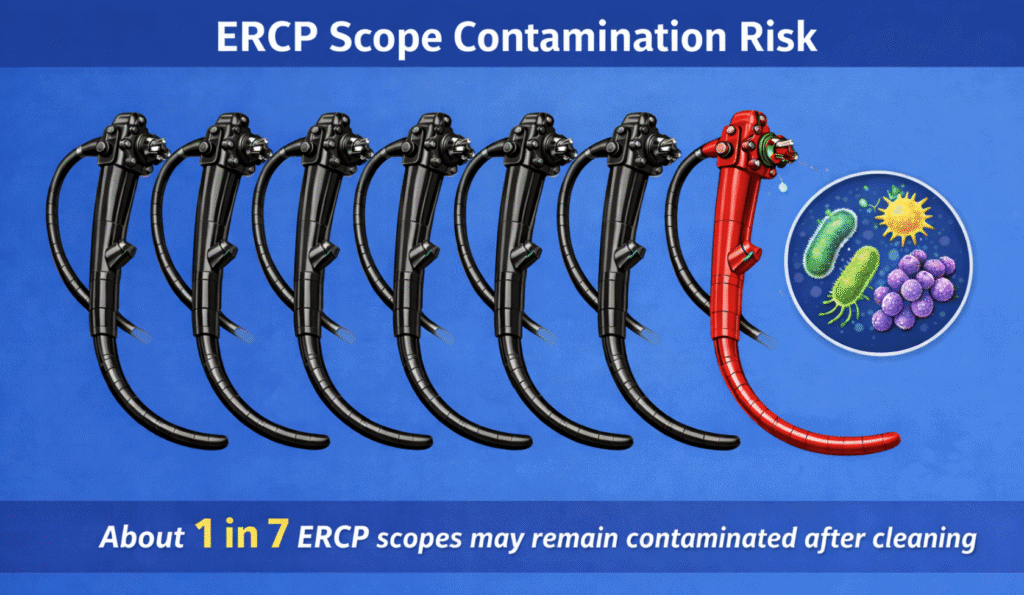
These findings suggest that infections following ERCP procedures may not be isolated incidents, but instead linked to persistent contamination risks associated with reusable scopes.
How ERCP Scope Design Problems May Lead to Infection Risk
ERCP scopes, known as duodenoscopes, are reusable devices that must be thoroughly cleaned and disinfected after each procedure. However, their complex design, particularly the presence of internal moving components, has raised serious concerns about whether they can be reliably sterilized between patients.
ERCP Scope Reprocessing and Its Limitations
After each use, duodenoscopes undergo a multi-step cleaning process known as “reprocessing,” which is intended to remove bacteria and make the device safe for reuse. This process typically includes:
- Manual cleaning to remove visible debris
- Flushing internal channels with cleaning solutions
- High-level disinfection using chemical agents
- Rinsing and drying before storage
These steps are widely used in hospitals and are designed to eliminate harmful microorganisms. However, investigations and lawsuits have raised concerns that even when these procedures are followed correctly, contamination may still remain inside the device.
Because ERCP scopes are reused on multiple patients, any bacteria that is not fully removed during reprocessing may be introduced into the next patient during the procedure.
The Elevator Mechanism and Design-Related Contamination Risks
A key concern with ERCP scopes is a component known as the elevator mechanism, a small movable part located at the tip of the scope that is used to guide instruments during the procedure.
While this feature is essential for performing complex treatments, it also creates significant challenges for cleaning and disinfection.
According to scope product liability lawsuits and safety investigations, the elevator mechanism and surrounding components may:
- Contain tight crevices and hinges where bacteria can become trapped
- Include moving parts that are difficult to fully access during cleaning
- Prevent disinfectants from reaching all internal surfaces
- Allow biological material to remain hidden after reprocessing
In addition to the elevator mechanism, other design features may contribute to contamination:
- Narrow internal channels that are difficult to fully flush
- Sealed or partially enclosed components that cannot be directly scrubbed
- Microscopic surface irregularities where bacteria can adhere and grow
These design limitations may allow bacteria to persist inside the scope, even after repeated cleaning cycles. As a result, contamination can be transferred from one patient to another, increasing the risk of serious infection.
Infections Linked to ERCP Scope Procedures
Patients exposed to contaminated ERCP scopes may develop serious and potentially life-threatening infections, particularly because these procedures involve direct access to the bile ducts and pancreas.
FDA Olympus scope warnings have highlighted the risk that duodenoscopes and other ERCP devices may remain contaminated after reprocessing, allowing dangerous bacteria to spread from one patient to another.
Common infections linked to ERCP procedures include:
- CRE (carbapenem-resistant Enterobacteriaceae): A highly drug-resistant bacteria that has been repeatedly linked to ERCP scope outbreaks and can be extremely difficult to treat.
- Sepsis and bloodstream infections: Occur when bacteria enter the bloodstream, potentially leading to organ failure if not treated quickly.
- Pseudomonas and other hospital-acquired infections: Frequently associated with contaminated medical equipment and capable of causing severe complications.
- Biliary infections (cholangitis): Infections in the bile ducts that can become serious if bacteria are introduced during the procedure.
- Pancreatitis with infection complications: Inflammation of the pancreas that may worsen if infection is present.
These infections often require a combination of treatment including hospitalization, IV antibiotics, intensive monitoring and often times additional procedures or surgeries.
Symptoms of an ERCP-Related Infection
Symptoms of infection after an ERCP procedure may develop quickly and should not be ignored. Common warning signs include:
- Fever and chills
- Abdominal pain, especially in the upper abdomen
- Nausea or vomiting
- Jaundice (yellowing of the skin or eyes)
- Dark urine or pale stool
More serious symptoms may indicate the infection is spreading:
- Rapid heart rate
- Confusion or disorientation
- Difficulty breathing
- Low blood pressure
These may be signs of sepsis and require immediate medical attention.
ERCP Scope Infection Outbreaks
Health officials have investigated multiple outbreaks of infections linked to ERCP procedures, where reusable scopes were identified as a potential source of contamination.
In one widely reported investigation, at least 16 patients were infected with dangerous bacteria following ERCP procedures performed over several years at a California hospital. Health officials later confirmed that 11 of those patients died, though many had serious underlying conditions at the time of infection. The findings raised significant concerns about contamination risks associated with reusable ERCP scopes and whether current cleaning methods are sufficient to prevent the spread of infection.
Investigators identified several factors that contributed to the outbreak, including:
- Reuse of the same ERCP scopes across multiple patients
- Detection of bacteria on the scopes themselves
- Failures or inconsistencies in cleaning and disinfection processes
- Design-related concerns that made the devices difficult to fully sterilize
In some cases, hospitals later expanded patient notifications and offered testing after discovering that additional individuals may have been exposed.
ERCP Infection Lawsuit Claims
ERCP infection lawsuits focus on whether the design and safety of duodenoscopes may have contributed to the risk of contamination. Claims being investigated often allege:
- Defective design: The elevator mechanism and internal components may prevent proper cleaning and sterilization.
- Failure to warn: Manufacturers may not have adequately warned healthcare providers about the risk of contamination.
- Inadequate cleaning instructions: Reprocessing guidelines may not fully address the challenges posed by the device’s design.
- Safer alternative designs not used: Lawsuits claim manufacturers could have developed safer or single-use devices to reduce infection risk.
These claims focus on whether patients were exposed to unnecessary risks due to how these devices were designed and marketed.
What Compensation May Be Available?
Individuals who develop serious infections after an ERCP procedure may be entitled to financial compensation. Compensation may include:
- Medical expenses and hospital bills
- Costs of ongoing treatment or rehabilitation
- Lost wages or reduced earning capacity
- Pain and suffering
- Long-term complications or disability
Each case is unique, and compensation depends on the severity of the injury and its impact.
Are there any costs to hire an ERCP Scope Infection Lawyer?
There are absolutely no out-of-pocket costs to review your case or hire our attorneys. ERCP scope infection claims are evaluated for individuals throughout the United States, and all cases are handled on a contingency fee basis.
Through contingency fee representation, individuals have access to the experience and resources of our national law firm to pursue compensation, regardless of their financial situation.
You pay nothing upfront to hire our ERCP Infection lawyers, and we only receive attorney fees and expenses if compensation is recovered. Our law firm receives nothing unless we win your case!
What Are the Steps in an ERCP Infection Case Evaluation?
Complete Our Case Evaluation Request Form. Providing contact information and some information about your ERCP infection case.
Get Contacted by Saiontz & Kirk You will be contacted by our law firm to help determine if financial compensation may be available for you and your family.
You Decide If You Want to Move Forward. If our lawyers determine that we can help with your case then you decide whether to move forward and hire us to pursue compensation.