
How To Identify OmniPod Recall Lot Numbers After Defective Pod Caused Diabetic Injury
OmniPod lot numbers may help users determine whether recalled insulin pods caused DKA, hospitalization or other serious diabetic injuries

Following two separate insulin pod recalls earlier this year, the lawyers at Saiontz & Kirk are investigating Omnipod 5 lawsuits for individuals throughout the United States who suffered serious diabetic injuries after a pod allegedly failed to deliver the insulin needed to control blood sugar levels.
The recalls involve defects that may cause insulin to leak inside the pod or outside the infusion site, instead of reaching the body. If insulin is under-delivered, blood glucose levels may rise quickly, increasing the risk of diabetic ketoacidosis (DKA), hyperosmolar hyperglycemic state (HHS), hospitalization, diabetic coma or death.
For individuals who experienced a serious diabetic injury, determining whether the pod came from a recalled lot may be one of the most important first steps. The affected OmniPod 5, OmniPod DASH and original OmniPod Eros pods were identified by lot number, which means the product name alone is not enough to confirm whether a specific pod was recalled.
That information may still be available even if the pod has already been discarded. Users may be able to locate the lot number on the five-pack box, individual pod tray, pod itself, controller history, mobile app records, pharmacy documents, supplier records, shipping records or photographs of the packaging.
Find Out If You Qualify for an
OMNIPOD LAWSUIT

In this post, we will explain how to find and verify recalled OmniPod lot numbers after a diabetic injury, and what records should be preserved if a lawsuit may be pursued.
⚖️ OmniPod Recall Lawyers
If your OmniPod 5, OmniPod DASH or original OmniPod Eros pod was impacted by the recall, and you suffered serious diabetic complications after the device failed to properly deliver insulin, you may be eligible to file a claim for financial compensation.
Our product liability lawyers are pursuing OmniPod recall lawsuits for individuals throughout the U.S. who suffered injuries that may have been caused by insulin under-delivery, including:
- Diabetic ketoacidosis (DKA)
- Hyperosmolar hyperglycemic state (HHS)
- Severe hyperglycemia
- Hospitalization
- Diabetic coma
- Wrongful death
If you or a loved one suffered injuries after using a recalled OmniPod insulin pod, financial compensation may be available through a lawsuit against the medical device manufacturer. Request a free case evaluation or call 1-800-522-0102 today to speak with an OmniPod recall lawyer.
OmniPod Recall Info On This Page
OmniPod Insulin Delivery Failure Risks
FDA OmniPod Recall Announcements
Why OmniPod Under-Delivery May Cause DKA
How To Check Recalled OmniPod Lot Numbers
Why Lot Number Verification Matters After an OmniPod Injury
Signs an OmniPod May Not Be Delivering Enough Insulin
What To Do If an OmniPod Was Recalled
OmniPod Recall Lawsuits
OmniPod Insulin Delivery Failure Risks
OmniPod systems are tubeless insulin pumps used by individuals with Type 1 and Type 2 diabetes to receive insulin throughout the day without multiple daily injections.
Each disposable pod is worn on the body and delivers insulin through a small cannula inserted under the skin. The pod is intended to provide a steady flow of insulin, and the OmniPod 5 system may also work with compatible continuous glucose monitoring technology to help adjust insulin delivery based on blood sugar levels.
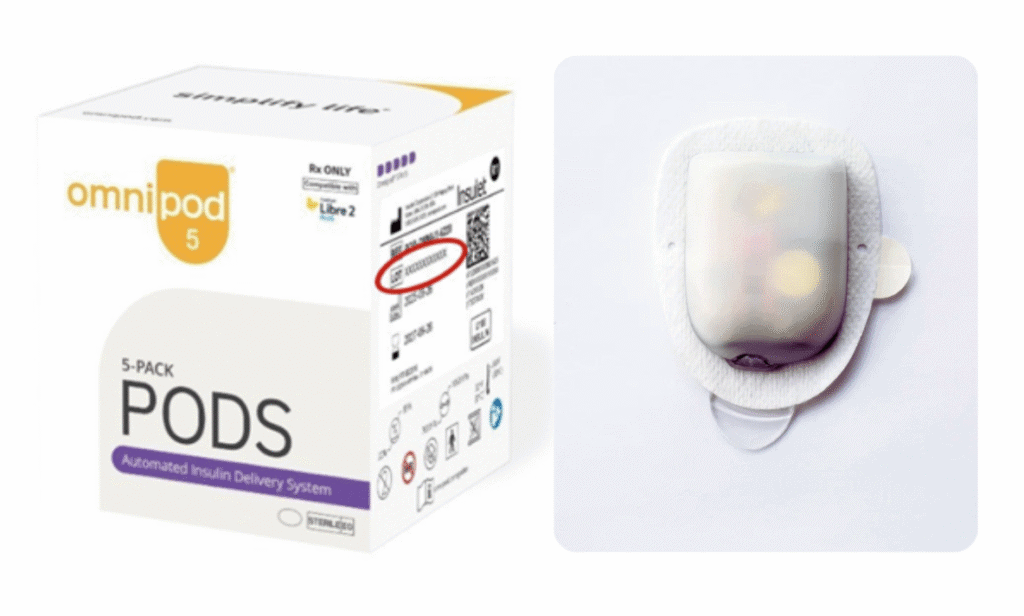
When the device works properly, users depend on the pod to deliver the insulin needed to keep glucose levels within a safe range. However, if a pod leaks or malfunctions, the user may believe insulin is being delivered when little or no insulin is actually reaching the body.
That concern is now central to two separate FDA recall announcements, as well as lawsuits alleging that different OmniPod defects may cause insulin under-delivery and dangerous spikes in blood glucose levels.
FDA OmniPod Recall Announcements
Federal regulators issued two separate OmniPod recall-related notices in 2026. Both involved the risk that users may receive less insulin than intended, but they involved different defects and different groups of products.
March 2026 OmniPod 5 Recall
The U.S. Food and Drug Administration first announced an OmniPod 5 recall on March 12, 2026, impacting specific lots of OmniPod 5 pods distributed in the United States.
The recalled OmniPod 5 pods are associated with Unique Device Identifier (UDI) 10385083000527. Some affected lot numbers begin with “PH1U,” but users should not rely on the prefix alone because only specific lots were included in the recall.
According to the FDA, the recalled OmniPod 5 pods may not deliver insulin as intended because of a tear in the internal tubing. If that occurs, insulin may leak inside the pod instead of being infused into the body, causing the user to receive less insulin than expected.
The FDA warns that this problem may lead to high blood glucose levels and diabetic ketoacidosis (DKA). The agency later identified the action as a Class I recall, which is the FDA’s most serious recall classification.
Users should verify the complete OmniPod 5 lot number through Insulet’s recall verification tool, rather than relying on the product name, UDI or lot prefix alone.
For a full list of recalled affected devices, download the FDA’s official list of impacted devices.
May 2026 OmniPod 5, DASH and Eros Recall Action
The FDA later announced a broader OmniPod recall-related action on May 26, 2026, involving specific lots of OmniPod 5, OmniPod DASH and original OmniPod Insulin Management System pods, also known as OmniPod Eros.
This second action involved more than 7 million pods and was separate from the March 2026 OmniPod 5 recall.
According to the FDA, the affected pods may have a small tear in the tubing or soft cannula just above the skin, between the pod and the point where the cannula enters the body. If that happens, insulin may leak outside the pod instead of being fully delivered.
The affected products include specific lots from three OmniPod systems:
- OmniPod 5
- OmniPod DASH
- Original OmniPod Insulin Management System, also known as OmniPod Eros
Because the May 2026 action involves multiple product families, users should check the complete lot number for their specific pod against Insulet’s affected-lot list or online recall verification tool. DASH and Eros users should not rely on the “PH1U” prefix, since that prefix does not determine whether those pods were affected.
Users may notice wetness on the skin, wetness on the pod adhesive or the smell of insulin. However, leaks may also go undetected, allowing blood glucose levels to rise before the user realizes insulin was not properly delivered.
Why OmniPod Under-Delivery May Cause DKA
The danger from both recall issues is the same: the user may not receive the insulin needed to control blood sugar levels.
Insulin allows the body to move glucose out of the bloodstream and into the cells, where it can be used for energy. When a person with diabetes receives too little insulin, glucose remains in the blood and may climb to dangerous levels.
If the problem is not identified and treated quickly, OmniPod insulin under-delivery may lead to:
- Severe hyperglycemia
- Diabetic ketoacidosis (DKA)
- Hyperosmolar hyperglycemic state (HHS)
- Dehydration
- Nausea and vomiting
- Confusion or altered mental state
- Loss of consciousness
- Diabetic coma
- Hospitalization
- Death
Diabetic ketoacidosis (DKA) is one of the most serious complications associated with insulin delivery failures. It occurs when the body does not have enough insulin and begins breaking down fat for energy, causing acids known as ketones to build up in the blood.
As ketones accumulate, the blood can become dangerously acidic. Symptoms may include extreme thirst, frequent urination, nausea, vomiting, abdominal pain, weakness, confusion, fruity-smelling breath and difficulty staying awake.
Without prompt medical treatment, DKA can become life-threatening and may result in coma, organ damage or death. This is why users who experience unexplained high blood sugar after using an OmniPod pod should seek medical guidance immediately, especially if they have symptoms of DKA or believe insulin was not delivered properly.
How To Check Recalled OmniPod Lot Numbers
OmniPod lot numbers may be found in several places, including the five-pack box, individual pod tray, pod itself, controller history, mobile app records, pharmacy documents, supplier records, shipping paperwork or photographs of the packaging.
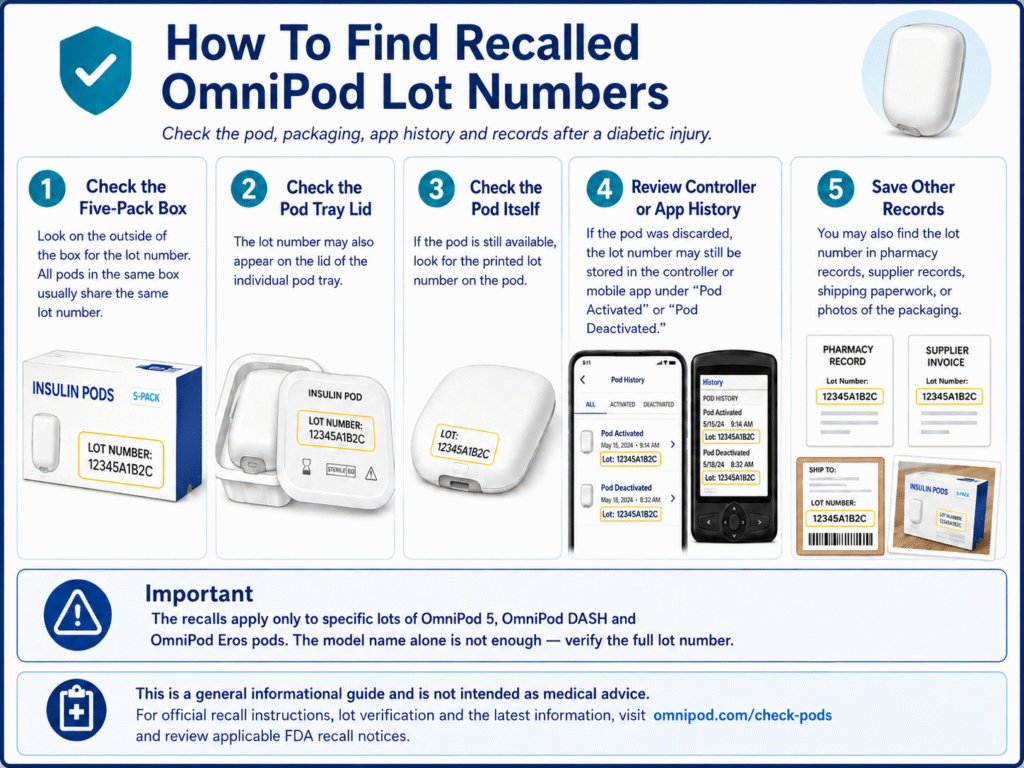
After a diabetic injury, users should try to locate the complete lot number for any pod that was in use before an unexplained blood sugar spike, DKA, hospitalization or other serious complication, then verify that number against the applicable 2026 recall information.
Step 1: Find the OmniPod Lot Number
The OmniPod lot number may be printed in several places, including:
- The lid of the individual pod tray
- The side of the five-pack OmniPod box
- The side or bottom of the pod itself
If the pod came from a five-pack box, every pod in that box should have the same lot number. Therefore, checking the lot number on the outside of the box may identify whether all pods in that package were part of a recall.
Users should photograph and save any pod boxes, tray lids or recalled pods, especially if a pod was in use before a serious diabetic event.
Step 2: Check Whether the Pod Was Part of the March 2026 OmniPod 5 Recall
The first recall action involved only certain OmniPod 5 pods distributed in the United States.
According to the FDA, these pods may contain a defect involving a tear in the internal tubing that delivers insulin. If that happens, insulin may leak inside the pod instead of being delivered into the body, which may cause high blood glucose levels and DKA.
For this recall, users should confirm whether the pod is an OmniPod 5 pod associated with UDI 10385083000527 and verify the full lot number through Insulet’s recall tool.
Some affected OmniPod 5 lot numbers may begin with “PH1U,” but users should not rely on that prefix alone. The full lot number must be checked because only specific lots were included.
Step 3: Check Whether the Pod Was Part of the May 2026 OmniPod 5, DASH or Eros Recall
The second recall action was separate from the March 2026 OmniPod 5 recall and involved certain lots of three different OmniPod systems:
- OmniPod 5
- OmniPod DASH
- Original OmniPod Insulin Management System, also known as OmniPod Eros
According to the FDA, this recall involves a manufacturing issue that may cause a small tear in the tubing or soft cannula above the skin. If that occurs, insulin may leak outside the pod instead of being fully delivered into the body.
For this recall, users must check the complete lot number for the pod. This is especially important for DASH and Eros users, since those products may not use the same lot number format as OmniPod 5.
Users should not rule out a recalled DASH or Eros pod simply because the lot number does not begin with “PH1U.” That prefix is not the test for whether a DASH or Eros pod was affected.
Step 4: Use Insulet’s Lot Verification Tool
After locating the lot number, users should enter the complete number into Insulet’s online recall verification tool.
The tool will indicate whether the pod was included in a recall and provide instructions for requesting replacement pods. Users may also contact Insulet Product Support at 1-800-641-2049 or use the company’s online live chat for help checking lot numbers.
If a pod is confirmed as recalled, FDA and Insulet instructions indicate that users should stop using the affected pod and replace it with an unaffected pod. If no unaffected pods are available, users should contact their healthcare provider to discuss another method of insulin delivery, such as temporary injections.
Step 5: Check Controller or App History for Discarded Pods
If the pod was already thrown away, the lot number may still be available through the OmniPod 5 controller or mobile app.
Users can check prior pod history by opening the controller or app and reviewing entries labeled “Pod Activated” or “Pod Deactivated.” These entries may show the lot number and sequence number for pods that were previously used.
However, controller and app history may only be available for a limited time. If the pod history is no longer available, users should look for the lot number in pharmacy records, supplier records, insurance records, photographs, shipping documents or saved packaging.
Why Lot Number Verification Matters After an OmniPod Injury
Lot number verification is critically important evidence if you are considering filing an OmniPod recall lawsuit.
If a recalled pod was in use before a diabetic emergency, the lot number may help show whether the injury followed use of a device that federal regulators and Insulet identified as having a potential insulin delivery defect.
Individuals who suffered DKA, HHS, hospitalization, diabetic coma or other serious complications should preserve any available proof of the pod lot number, including packaging, app screenshots, CGM data, blood glucose logs, hospital records and communications with Insulet.
Signs an OmniPod May Not Be Delivering Enough Insulin
Some OmniPod users may notice visible signs of a leak. Others may not realize anything is wrong until blood glucose levels rise. Possible warning signs may include:
- Wetness on the skin near the pod
- Wetness on the pod adhesive
- Smell of insulin
- Unexpected high blood glucose readings
- Blood sugar that does not respond to correction doses
- Alarms or alerts from the pod
- Nausea
- Vomiting
- Excessive thirst
- Frequent urination
- Abdominal pain
- Weakness or fatigue
- Confusion
- Fruity-smelling breath
- Difficulty staying awake
Anyone experiencing signs of severe hyperglycemia or DKA should seek emergency medical care immediately.
What To Do If an OmniPod Was Recalled
If a pod is confirmed as part of an affected lot, users should follow recall instructions and DO NOT USE the recalled device.
Recommended steps include:
- Stop using the recalled pod.
- Replace it with a pod from an unaffected lot.
- Confirm that the replacement pod is not from a recalled lot.
- Contact a healthcare provider if no unaffected pods are available.
- Ask about temporary insulin injections or another insulin delivery method if needed.
- Request replacement pods through Insulet.
- Preserve the recalled pod, box, tray lid and related records if an injury occurred.
Users should not stop insulin therapy without another method of insulin delivery in place. If an affected pod must be removed and no replacement pod is available, users should contact their doctor, diabetes educator or emergency medical provider for instructions.
OmniPod Recall Lawsuits
OmniPod recall lawsuits are being evaluated for individuals who suffered serious injuries after using recalled pods that allegedly failed to deliver insulin properly.
Potential claims may involve allegations that Insulet manufactured and sold defective pods that were prone to leaking, failed to deliver adequate insulin and did not provide users with reliable warnings before dangerous blood glucose spikes occurred.
Families may be able to pursue compensation if a recalled OmniPod caused or contributed to:
- Diabetic ketoacidosis (DKA)
- Hyperosmolar hyperglycemic state (HHS)
- Emergency room treatment
- Hospitalization
- Intensive care admission
- Diabetic coma
- Loss of consciousness
- Permanent injury
- Death
The product liability lawyers at Saiontz & Kirk are reviewing OmniPod recall lawsuits for individuals who suffered serious diabetic injuries after using recalled OmniPod 5, OmniPod DASH or OmniPod Eros pods.
Call 1-800-522-0102 or request a free case evaluation today. There are no upfront costs, and no attorney fees unless compensation is recovered.
1 Comment • Add Your Comments
Doris says:
I have had high sugars and can’t get it it wouldn’t respond
Posted on July 14, 2026 at 11:20 pm