

Spinal Cord Stimulator Problems Overview
Spinal cord stimulator lawsuits are being filed by individuals throughout the U.S. who experienced painful problems from unnecessary electrical shocks, lead failures, worsening pain, spinal cord injuries and other complications. These claims are not limited to one manufacturer or one type of device, as spinal cord stimulator problems have been linked to implants sold by Abbott, Boston Scientific, Medtronic and Nevro.
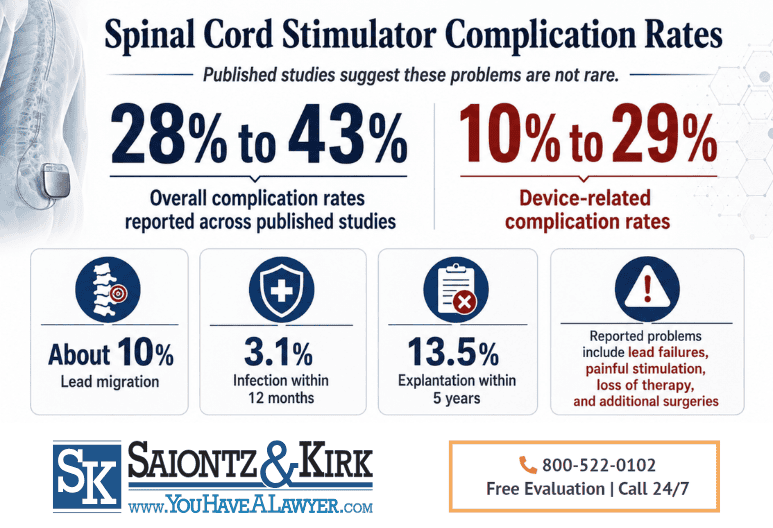
Published research has reported overall spinal cord stimulator complication rates ranging from approximately 28% to 43%, with device related problems reported in 10% to 29% of cases. Although the estimates vary by device, follow up period and how complications were defined, the findings show that individuals experiencing serious spinal cord stimulator problems are not alone.
Lawsuits now allege that manufacturers repeatedly introduced changes to spinal cord stimulator leads, batteries, software and stimulation features without adequately testing how the modified systems would perform inside the body. Plaintiffs maintain that the manufacturers used earlier approvals to move updated devices to market faster, while failing to perform sufficient research on the associated risks of each new combination of components and features.
Who Can File a Spinal Cord Stimulator Injury Lawsuit?
Individuals may qualify to file a spinal cord stimulator lawsuit if they received a permanent spinal cord stimulator and later experienced:
- Lead migration or fracture
- Electrical shocks or overstimulation
- Worsening chronic pain
- Severe nerve pain
- Spinal cord compression
- Surgical site infections
- Device removal or an explant procedure
- Permanent nerve damage
- Spinal cord injury
- Wrongful death
If you or a loved one suffered serious complications after receiving a spinal cord stimulator implant, you may be eligible for a spinal cord stimulator lawsuit settlement. Contact our spinal cord stimulator lawyers today for a free case evaluation.
Info About Spinal Cord Stimulator Problems On This Page
Problems With Spinal Cord Stimulator Components
Manufacturers Named In Spinal Cord Stimulator Problem Lawsuits
Lead Migration Complications
Lead Fractures and Damage
Electrical Shocks and Painful Overstimulation
Loss of Pain Relief
Battery and Charging Problems
Programming and Communication Failures
Spinal Cord Stimulator Infections
Nerve Damage and Neurological Problems
Spinal Cord Compression and Epidural Hematoma
Pain at the Spinal Cord Stimulator Implant Site
Spinal Cord Stimulator Revision Surgery
Spinal Cord Stimulator Explant Surgery
When May a Spinal Cord Stimulator Problem Lead to a Lawsuit?
Contact Our Spinal Cord Stimulator Injury Lawyers
Problems With Spinal Cord Stimulator Components
For many individuals, the first sign of problems with a spinal cord stimulator is the return of their original pain, an unexpected tingling sensation, painful shocks or repeated programming appointments that fail to correct the underlying issue. When reprogramming does not work, the recipient may require imaging, lead revision, generator replacement or spinal cord stimulator surgery to remove the entire system.
A spinal cord stimulator depends on several implanted and external components working together. A failure involving any part of the system may interrupt pain relief, change where stimulation is felt or require another surgical procedure. The main components include:
- Electrical leads: Temporary leads may be used during a spinal cord stimulator trial, while permanent percutaneous leads or paddle electrodes are used during permanent implantation. These thin wires are placed in the epidural space and may migrate, fracture, kink or disconnect.
- Implantable pulse generator: The pulse generator contains the battery and electronics that create the electrical impulses. It may lose power, stop charging, overheat or shut down unexpectedly.
- Extension wires and connections: Connectors between the leads and pulse generator may loosen, break or fail to transmit electrical stimulation properly.
- External controller and charger: Communication or charging failures may prevent the patient from adjusting, charging or powering the implanted device.
- Programming software: A healthcare provider or manufacturer representative may use software to adjust the frequency, strength and location of stimulation. If the spinal cord stimulator is set incorrectly or the software fails, the patient may experience poor pain control, overstimulation or repeated error messages.
- Implant pocket and surgical site: The pulse generator is commonly placed under the skin near the lower back, abdomen or buttock. The area may develop infection, persistent surgical pain, swelling, poor wound healing, skin erosion or movement of the generator.
A permanent implant may not produce the same results experienced during the spinal cord stimulator trial. Differences in lead placement, programming, implanted hardware and the recipients condition may affect how the permanent spinal cord stimulator performs after surgery.
Spinal Cord Stimulator Devices Named In Lawsuits
Spinal cord stimulators are manufactured by several major medical device companies. Each company offers different leads, pulse generators, charging systems, stimulation settings and programming features.
Saiontz & Kirk is reviewing potential claims involving:
- Abbott Spinal Cord Stimulator Lawsuits: Proclaim, Eterna, Prodigy, Protégé, Genesis and other systems sold under the Abbott, St. Jude Medical or Advanced Neuromodulation Systems names. Reported problems may include electrical shocks, burning pain, lead migration, loss of therapy, battery failures and device removal.
- Boston Scientific Spinal Cord Stimulator Lawsuits: WaveWriter Alpha, Spectra WaveWriter, Precision Montage MRI, Precision Spectra, Precision Plus and other systems. Lawsuits have alleged lead failures, painful stimulation, overheating, loss of pain relief, neurologic complications and additional surgery.
- Medtronic Spinal Cord Stimulator Lawsuits: Intellis, Inceptiv, Restore, RestoreAdvanced, RestoreSensor, PrimeAdvanced, Synergy, Vectris leads and other systems. Reported complications may include electrical shocks, charging problems, unexpected shutdowns, lead migration, muscle weakness and permanent nerve damage.
- Nevro Spinal Cord Stimulator Lawsuits: Senza, Senza II, Senza Omnia, HFX, HFX iQ and other high frequency spinal cord stimulation systems. Reports have included burning pain, failed pain relief, charging failures, communication problems, repeated reprogramming and removal surgery.
The cause of a spinal cord stimulator problem may depend on the specific model, implanted components, stimulation technique and design changes made to the system over time. Separate pages provide additional information about the lawsuits and reported problems involving each manufacturer.
Spinal Cord Stimulator Lead Migration
Electrical leads must remain in a precise position near the spinal cord to deliver stimulation to the intended area. If the stimulator leads fracture or migrate, the electrical impulses may stop covering the individuals original pain or begin affecting another part of the body.
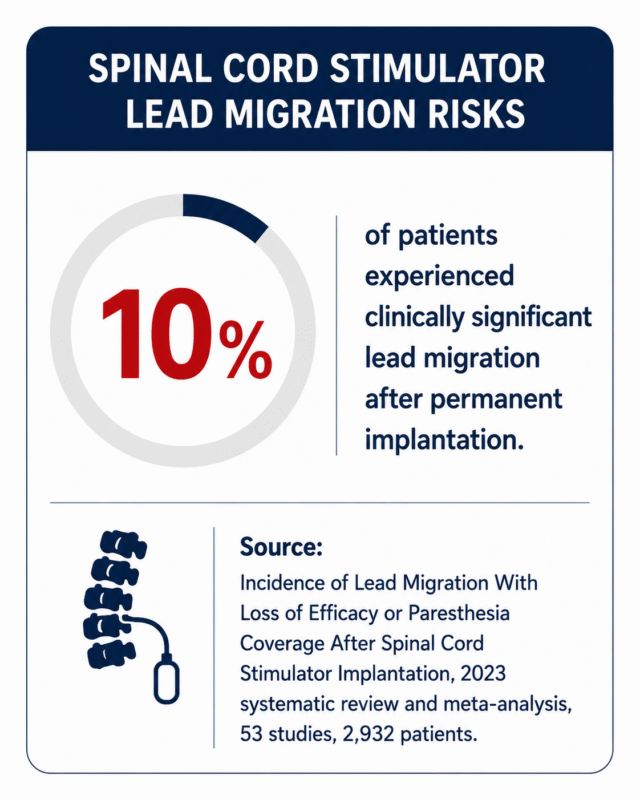
Lead migration is one of the most frequently studied device related complications involving spinal cord stimulation. A 2023 systematic review and meta analysis evaluated 53 studies involving 2,932 patients and estimated that approximately 10% experienced clinically significant lead migration after spinal cord stimulator implantation. Most cases were identified after individuals lost pain relief or noticed an unexpected change in stimulation.
Problems associated with spinal cord stimulator lead migration may include:
- Sudden loss of pain relief
- Stimulation moving to another part of the body
- Shocks or jolts during movement
- Burning or uncomfortable stimulation
- Pain returning in the back, legs, arms or neck
- Stimulation changing when bending or twisting
- Repeated programming that does not restore coverage
- Pain scores increasing after the device initially worked
X rays or other imaging may show that the lead has moved. Reprogramming may restore coverage in some, but significant migration may require another surgical procedure to reposition or replace the lead.
Lead design may also influence the type of problem encountered. Percutaneous leads are inserted through a needle, while paddle electrodes generally require a more invasive procedure. Research comparing percutaneous and paddle electrodes has identified differences in early complications, lead migration and later reoperation rates.
Spinal Cord Stimulator Lead Fractures and Damage
Spinal cord stimulator leads remain inside the body and may be exposed to repeated bending, twisting and physical stress. Over time, a wire may fracture, kink, disconnect or develop abnormal electrical resistance that prevents the system from functioning properly.
FDA adverse event reports involving spinal cord stimulators describe lead fractures, high impedance, damaged connections and complete loss of therapy. These reports do not establish how often the problems occur, but they identify recurring failure patterns reported by recipients, healthcare providers and manufacturers.
A damaged lead may cause:
- Intermittent stimulation
- Complete loss of stimulation
- Sudden return of pain
- Painful shocks
- Stimulation in the wrong area
- Device error messages
- Abnormal impedance readings
- Failure to communicate with the pulse generator
- Inability to program the device
A fractured or disconnected lead generally cannot be corrected by changing the programming. Another spinal cord stimulator surgery may be required to replace the lead, reconnect the system or remove the implanted device.
Damaged, abandoned or fractured leads may also affect whether an individual can safely undergo magnetic resonance imaging. Before an MRI is performed, the imaging facility should be provided with the implant card and exact device information.
Electrical Shocks and Painful Overstimulation
Spinal cord stimulators are designed to use controlled electrical impulses to help block pain signals. If those impulses become painful, unpredictable or difficult to control, the device may instead cause new pain or make existing symptoms worse while it is turned on.
FDA adverse event reports describe shocks, burning sensations, painful stimulation and unexpected changes in therapy. Individuals may describe the sensations as:
- Shocking
- Jolting
- Zapping
- Stabbing
- Burning
- Vibrating
- Pulsing
- Buzzing
- An uncomfortable tingling sensation
The stimulation may affect the back, legs, buttocks, abdomen, chest, arms or another location that was not intended to receive therapy. Some may notice that the stimulation becomes stronger when they bend, twist, stand, lie down or change positions.
If a spinal cord stimulator is set too high, programmed incorrectly or unable to regulate its output, it may deliver excessive stimulation. Similar symptoms may also result from lead migration, damaged wires, connection failures or a malfunctioning pulse generator.
Turning the device off may stop the electrical sensations, but it may also cause the immediate return of severe pain. This can leave the individual choosing between painful stimulation and the chronic pain the device was intended to treat.
Loss of Pain Relief from Spinal Cord Stimulator
Most individuals undergo a trial period before receiving a permanent spinal cord stimulator. Temporary leads are placed in the epidural space and connected to an external generator to determine whether spinal cord stimulation reduces pain scores and improves function.
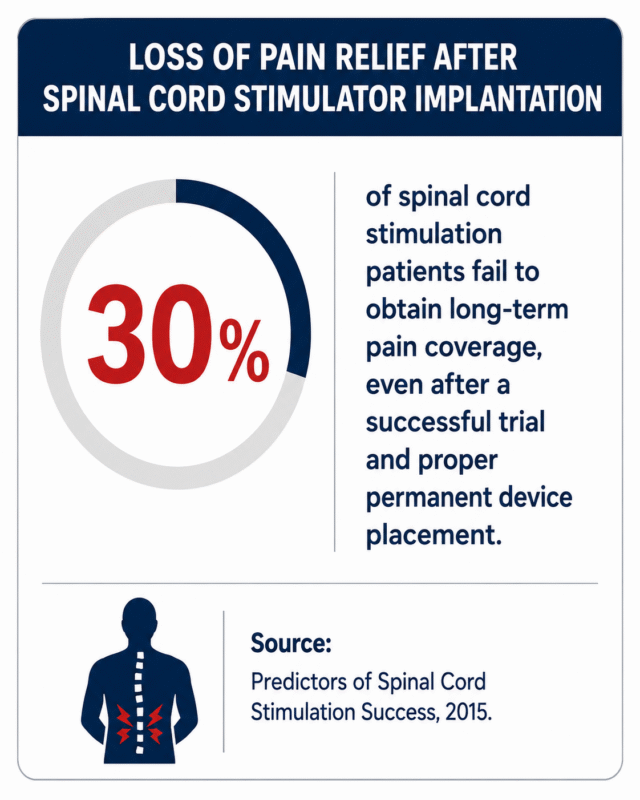
However, a successful trial does not guarantee lasting results after permanent implantation. Published research has estimated that as many as 30% of spinal cord stimulation patients fail to obtain long term pain coverage, even after meeting the requirements for a successful trial and receiving a properly positioned permanent device.
Those who lose the benefit of spinal cord stimulation may experience:
- Return of the original chronic pain
- Worsening neck pain, back pain or leg pain
- Pain spreading to new areas
- Reduced stimulation coverage
- Stimulation that no longer masks the pain
- Only temporary improvement after reprogramming
- Increased reliance on pain medications
- Reduced mobility or ability to work
- Pain scores increasing after an initial period of relief
Loss of pain relief does not always establish that the device is defective. Failed back surgery syndrome, spinal stenosis, complex regional pain syndrome and other underlying conditions may progress, while some may develop reduced responsiveness to stimulation over time.
However, loss of pain control may also result from lead migration, a fractured wire, battery failure, programming problems or another device malfunction. When repeated programming does not restore therapy, the recipient may require imaging, revision surgery or complete removal of the system.
Battery and Charging Problems
The implantable pulse generator supplies the power needed to deliver spinal cord stimulation. Rechargeable systems depend on communication between the implanted battery and an external charger, creating several opportunities for therapy to be interrupted.
A 2024 meta analysis found that recharging problems caused unintentional interruptions of stimulation in approximately one out of every ten patients using rechargeable neurostimulation systems. The researchers also found that external charging components failed more often than the implanted portions of the system.

Battery and charging problems may include:
- Battery draining faster than expected
- Device failing to hold a charge
- Long or unsuccessful charging sessions
- Charger failing to connect with the implanted device
- Pulse generator unexpectedly shutting down
- Loss of stimulation as the battery drains
- Generator becoming unusually warm
- Repeated battery or charging error messages
- Need for early generator replacement
- Complete device failure
FDA adverse event reports also describe premature battery depletion, overheating, charging failures and communication problems involving spinal cord stimulators. The FDA has issued recalls involving spinal cord stimulator rechargers and programming components, although individual reports and recalls cannot be used to calculate how frequently these problems occur.
Individuals may undergo repeated troubleshooting and reprogramming before it becomes clear that the charger or implanted pulse generator has failed. When external adjustments cannot restore reliable therapy, spinal cord stimulator surgery may be required to replace the generator.
Programming and Communication Failures
Modern spinal cord stimulators rely on software, wireless communication and multiple treatment programs. These features allow a pain physician or device representative to adjust the strength, frequency and location of electrical stimulation, but they also create additional points where the system can fail.
Problems may arise when the external controller cannot connect, software does not communicate with the implant or a programmed setting causes painful or ineffective stimulation.
Reported issues may include:
- External controller failing to connect
- Device refusing to enter a selected program
- Therapy shutting off unexpectedly
- Stimulation changing without the patient’s input
- Settings failing to provide pain control
- Repeated error messages
- Inability to adjust stimulation
- Painful stimulation after settings are changed
- Loss of communication with the pulse generator
Spinal cord stimulator lawsuits have also raised concerns about manufacturer representatives allegedly adjusting spinal cord stimulation settings without adequate involvement from a licensed healthcare provider. The claims maintain that repeated reprogramming may delay imaging or surgery that would identify the actual device failure.
Spinal Cord Stimulator Infection
An infection may begin with tenderness or redness around the incision and progress into a deeper problem involving the leads, pulse generator or surrounding tissue. Because the hardware remains inside the body, serious surgical site infections may be difficult to eliminate without device removal.
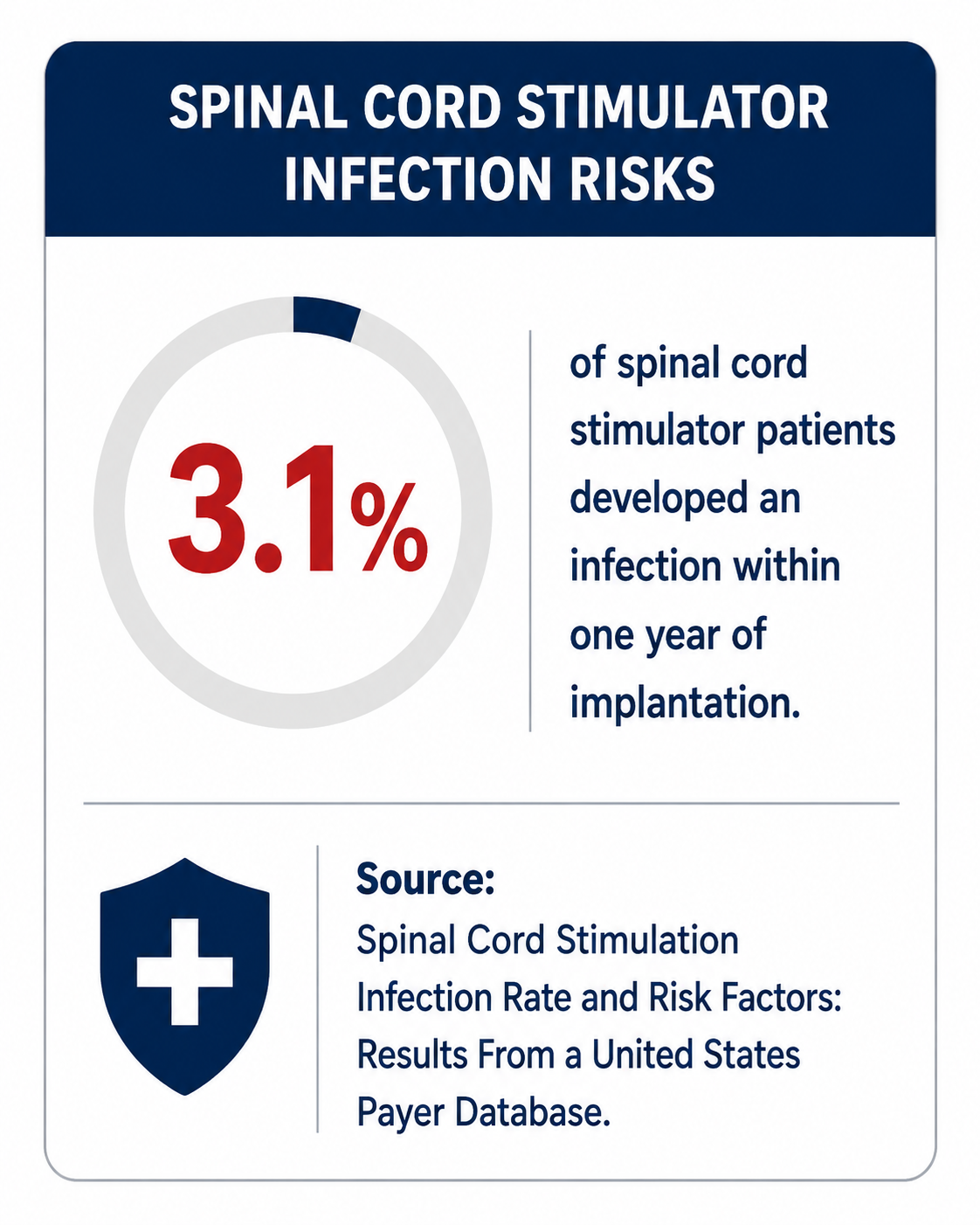
A large United States insurance claims study found that approximately 3.1% of spinal cord stimulator patients developed an infection within one year of implantation.
Infection may develop around:
- The surgical incision
- The pulse generator pocket
- The lead entry site
- Extension wires
- Deeper tissue around the implanted system
Spinal Cord Stimulator Infection Symptoms
- Redness
- Swelling
- Warmth
- Drainage
- Increasing surgical pain
- Fever
- Chills
- Wound reopening
- Poor wound healing
- Skin breakdown over the generator
- Exposure of implanted components
Risk factors for infection and poor healing may include diabetes, smoking, immune system problems, prior infections and certain antiplatelet and anticoagulant medications. Individuals should follow the instructions provided by their surgeon and disclose all medications before spinal cord stimulator implantation.
A superficial infection may sometimes be treated with antibiotics and wound care. A deeper infection involving the implanted device may require explant surgery, hospitalization, intravenous antibiotics or treatment for sepsis.
Nerve Damage and Neurological Problems
A spinal cord stimulator is implanted close to the spinal cord and nearby nerves. New numbness, muscle weakness, balance problems or changes in bladder and bowel control should not be dismissed as a normal part of recovery.
Neurologic complications may include:
- Numbness
- Tingling
- Burning nerve pain
- Muscle weakness
- Leg weakness
- Foot drop
- Shaking or muscle spasms
- Difficulty walking
- Loss of coordination
- Falls
- Balance problems
- Changes in bladder function
- Changes in bowel function
- Sexual dysfunction
- Partial or complete paralysis
These problems may result from direct trauma during lead placement, lead migration, bleeding, infection, scar tissue or pressure within the spinal canal. FDA adverse event reports also contain accounts of weakness, nerve injuries, mobility problems and additional surgery following spinal cord stimulator complications.
In rare cases, a spinal cord injury may cause permanent loss of movement or sensation. New muscle weakness, difficulty walking, loss of bladder or bowel control or rapidly worsening numbness may require emergency medical evaluation.
Spinal Cord Compression and Epidural Hematoma
The spinal canal contains limited space around the spinal cord. Bleeding, swelling, infection, scar tissue or an implanted component may create pressure that damages the spinal cord or nerve roots.
An epidural hematoma is a collection of blood within the spinal canal. This serious complication may develop after a spinal cord stimulator trial, permanent implantation or revision surgery. Warning signs may include:
- Sudden severe back pain
- Rapidly worsening muscle weakness
- Numbness in the legs
- Difficulty standing or walking
- Loss of coordination
- Loss of bladder or bowel control
- Paralysis
Spinal cord compression may require emergency magnetic resonance imaging, another form of diagnostic imaging and immediate surgery. Delayed treatment may increase the risk of a permanent spinal cord injury.
Pain at the Spinal Cord Stimulator Implant Site
The pulse generator is commonly placed beneath the skin near the lower back, abdomen or buttock. Even if the electrical components continue to work, the implant pocket may become a source of persistent surgical pain.
Pain around the implanted device may develop when:
- The generator moves under the skin
- The device rotates or flips
- The implant presses against nearby tissue
- Scar tissue forms around the generator
- The battery is positioned too close to the skin
- The patient loses weight after surgery
- The device causes pain while sitting or sleeping
- The incision develops poor wound healing
- The skin becomes thin or breaks down over the implant
Persistent implant site pain may interfere with sleeping, sitting, driving, physical therapy and other normal activities. A physician may recommend repositioning the pulse generator or creating a new implant pocket. When those options fail, device removal may be necessary.
Spinal Cord Stimulator Revision Surgery
Revision surgery may be proposed when a pain physician believes the device problem can be corrected without removing the entire spinal cord stimulation system. For the recipient, revision means undergoing another surgical procedure with additional costs, recovery time and associated risks.
A revision procedure may involve:
- Repositioning migrated leads
- Replacing fractured or damaged leads
- Reconnecting electrical components
- Reanchoring percutaneous leads
- Replacing paddle electrodes
- Replacing the battery or pulse generator
- Moving the generator to another location
- Removing infected components
- Replacing the entire spinal cord stimulator system
Each additional surgery can bring new risks, including infection, bleeding, nerve damage and scar tissue.
Spinal Cord Stimulator Explant Surgery
Removal of a spinal cord stimulator is often the final step after repeated programming and revision attempts fail to restore safe and effective pain relief. The decision may follow months or years of electrical shocks, worsening pain, infection or failed spinal cord stimulator surgery.
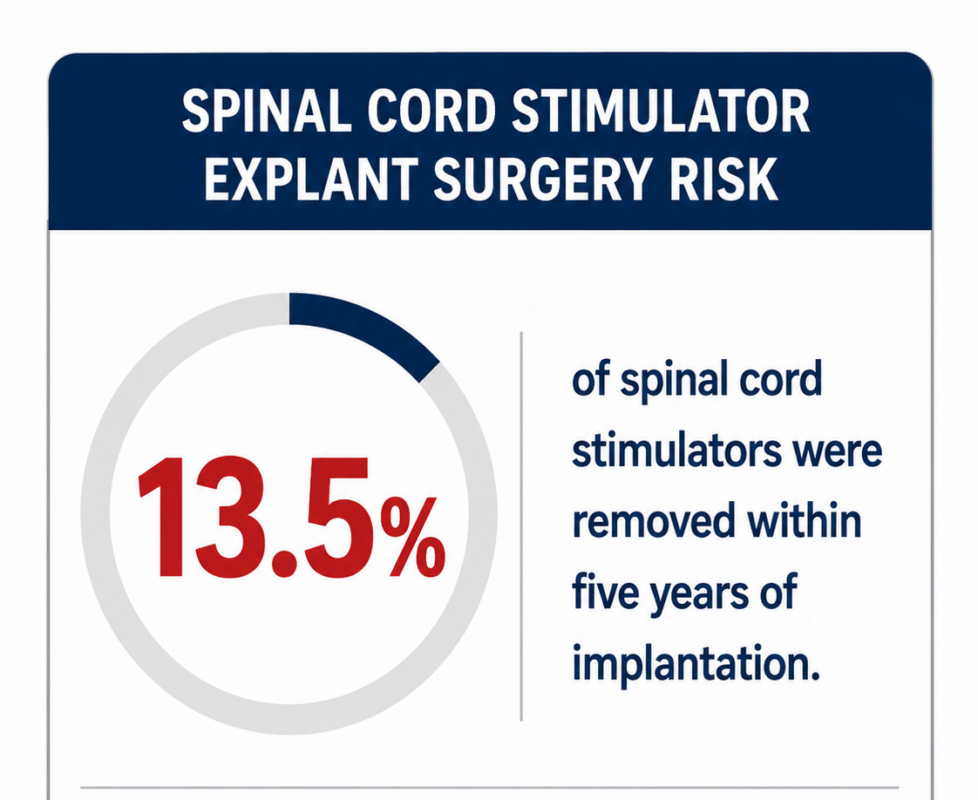
One long term study found that approximately 13.5% of spinal cord stimulators were removed within five years of implantation. Reasons for removal included loss of therapy, infection, device failure and other medical complications.
FDA reports and published research have identified several reasons for removal, including:
- Infection
- Lead migration
- Lead fracture
- Painful electrical shocks
- Burning or overstimulation
- Battery or pulse generator failure
- Persistent implant site pain
- Loss of pain relief
- Need for magnetic resonance imaging
- Neurologic complications
- Repeated unsuccessful reprogramming
- Failed revision surgery
Device removal may involve the pulse generator, leads, extension wires and other implanted components. The complexity of the procedure may depend on the type of lead, the length of time since implantation and the amount of scar tissue surrounding the system.
Removal does not always reverse the harm. Some individuals continue to feel pain, experience neurologic symptoms or require pain medicine and additional treatment after the permanent implant is removed.
When May a Spinal Cord Stimulator Problem Lead to a Lawsuit?
Not every complication establishes that a spinal cord stimulator manufacturer is legally responsible. Spinal cord stimulation is an invasive form of interventional pain management, and known risks may occur even when the device is manufactured and implanted properly.
However, a product liability claim may be available when evidence indicates that a defective component, inadequately tested design change or insufficient warning caused serious harm. Potential allegations may include:
- A lead fractured or failed prematurely
- A defective component allowed lead migration
- The pulse generator or battery malfunctioned
- The device delivered unsafe electrical stimulation
- The manufacturer failed to investigate reported problems
- Doctors and patients were not adequately warned
- New features were introduced without sufficient testing
- A manufacturer representative improperly influenced treatment
- Repeated programming concealed an underlying device failure
- The problem caused revision or device removal surgery
- The patient suffered permanent nerve damage or a spinal cord injury
Contact Our Spinal Cord Stimulator Injury Lawyers
The product liability lawyers at Saiontz & Kirk are reviewing potential claims for individuals who experienced serious spinal cord stimulator problems involving Abbott, Boston Scientific, Medtronic, Nevro and other implanted pain management devices.
Call 1-800-522-0102 or complete the form on this page to find out whether you may qualify for a spinal cord stimulator lawsuit.
All cases are handled on a contingency fee basis, which means there are no fees or expenses unless we win your case.
FIND OUT IF YOU QUALIFY FOR A SPINAL CORD STIMULATOR LAWSUIT SETTLEMENT